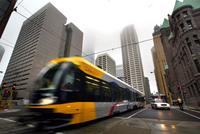
Showing posts with label Transportation. Show all posts

Saturday, September 29, 2007

Back in My Element

This week I attended a Transportation field hearing at the Anoka County Court House. I was asked to attend and prepare testimony before the committee by Transit for Liveable Communities. I was impressed with the large turnout and the number of proffessionals working on transportation in the Northwest Metro who provided some great testimony on the state of our infrastructure, systems and sources of funding road and transit improvements, and where improvements need to be made.

Here is the statement that I prepared, and for time constraints limited to two paragraphs:

Transportation hearing Anoka County

I am a resident of Brooklyn Park – like most of the residents of the Northwestern suburbs I work in Minneapolis. Sometimes I drive and sometimes I take the 766 Metro Transit bus from the Noble Park and Ride. Either mode, it takes me an average of 45 minutes to an hour to travel 15 miles.

We need improvements in both roads and transit to reduce travel times, improve efficiency, and ensure the safety of our transportation system.

Better roads and transit will require setting priorities and finding revenue sources. In the Northwest Metro we now await the day that the Northstar Commuter rail line stops in our communities and eases many of our commutes. This is a major victory for transportation in Minnesota and the Northwest Suburbs. However, there is still more to be done. The completion of Highway 610, fixing the Devil’s Triangle (Intersection of 85th Ave, Highway 169, and CR-81), and the establishment of a dedicated transitway in the form of Bus Rapid Transit or Light Rail Transit for CR-81. And we need an improved North South road, a 252 without stoplights or an improved highway 10. We should push to keep these projects a priority in Minnesota.

To help keep these projects a priority, reliable sources of funding will be required in addition to the MVST amendment. A gas tax increase would help fund roads and brides (as constitutionally stated) while a regional sales tax could possibly be levied for transit improvements as has been successfully demonstrated in other similar sized Metropolitan Areas.

The issue of transportation affects everyone in Minnesota. We need Bipartisan efforts based on reality and a comprehensive vision for the future.

Before my Testimony, a representative from Ramsey stated that more leadership was needed from the committee. Representative Hortmann (DFL 47B my District) responded that the DFL majority and the committee are willing to negotiate and compromise, however, the Governor has to participate as well.

In the beginning of my testimony I thanked the committee for their hard work and leadership and stated that we have great leadership and representation from the local and county levels in state government and that the State is lacking in its leadership, that the real person who should be at these field hearings is Governor Pot-Hole Pawlenty himself.

It felt good to be surrounded with citizens and proffessionals who are passionate and concerned about the future of our state and region in regards to transportation and the affect it has on quality of life and economic and social vitality for the Midwest.

Since graduating from College in the Spring and looking and finding employment I haven't been able to enjoy reading up and emmersing myself in Transportation, particullary HSR. I have been continueing to follow the CA HSR plans and press releases. Although, one can argue that more exciting things are happening here with State government and the DFL's calling for the removal of Carole Molnaue as the head of MNDOT; it will be interesting to see how this is resolved.

Gophers play Ohio State this evenning, we will see if the weather holds. Right now, Purdue is kicking the snot out of Norte Dame 23-0 at the half. Gophers will more than likely get slaughtered, but it still should be a fun (if not infuriating) game to watch. Been meaning to write about the new job, and I think I will try and get some pictures of our store and talk about my posiition and the awesome new truck we recieved last week.

Until next post,

Monday, January 29, 2007

A response to an old question

Way back in September my brother posted this challenge in a post:
Since I have been on a roll with the topic of High Speed Rail lately I thought I would give a proper response as to what I will be bringing back in the Spring of 07...
Here Goes...

I'm Bringin' High Speed Back
*Yeah*
It will make up for what the Midwest Lacks
*Yeah*
From Minnesota to Chi-Town in under 3 hours flat
*Yeah*
take it to the platform...
Get your HSR, that's High Speed Rail baby, Get your HSR, go ahead get goin' with it, get your HSR, that's High Speed Rail, Get your HSR

180 Miles per Hour that's how fast it goes
*Yeah*
So you better hang onto your clothes
*Yeah*
Just watch that Bullet Train just come and Go
Get your ticket and take it to the station...
Get your HSR, that's High Speed Rail baby, Get your HSR, go ahead get goin' with it, get your HSR, that's High Speed Rail, Get your HSR

So that's what I am bringing back, the rails shall rise again from the ashes. If anyone would like to help me make a vid for this I think it would be sweet and worth a laugh for a presentation.

Tuesday, January 23, 2007

All right Senior Thesis: Game On

I touched on this topic at the beginning of the New Year, but here are some thoughts that have materialized in the past few days with my Senior Thesis Writing Seminar:

Possible Topics:
From Blog Photos

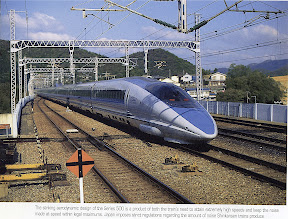
Too often I have used European examples of High Speed Rail; Not this time, the above image is of the Nozomi Series 500 Shinkansen in Japan from Bullet Trains. According to sources on Wikipedia, The Nozomi can reach speeds of 320km or 200 MPH, but is currently only operating at a maximum of 300 km or 186 MPH.

1) The Need for High Speed Rail (HSR) in the Midwest.
The idea came to me while I was on Study Abroad participating in the Scandinavia Urban Studies Term (SUST) through HECUA last semester. It was very easy and reasonably priced to get on a long-haul train and go from Oslo-to-Bergen in roughly 6 hours. At the end of my term, I attended a conference on the development of High Speed Rail (HSR) corridors in Norway that included High Speed proposals with service from Oslo-to-Trondheim and Oslo-to-Bergen.
This got me curious as to why the United States did not have a High Speed Rail network and what was being done in the field. Over break I began reading a few sources, particularly High Speed Rail Policy for the 21st Century by Anthony Pearl and read over the 2004 Executive Report of the Midwest Regional Rail System
My paper would be similar to these sources of looking at European HSR applications and then determining policy solutions, amounts of financing and sources of financing, as well as feasibility for applications in the Midwest to connect to HSR networks pre-existing predominantly in the Northeast corridors (Acela, formerly the Metroliner).
From Blog Photos
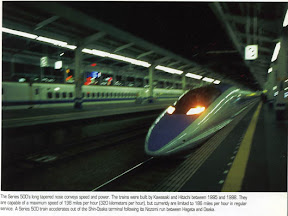
Another picture of the Nozomi 500 Series Shinkensen

2) I-494 Transitway Study
This topic would directly relate to my internship at the State Capitol with Rep. Ann Lenczewski and is a topic that is directly related to the Twin Cities MSA and the South Metro. This would be a preliminary model study of transit options for the I-494 Corridor including: BRT, LRT, and possibly PRT. This study would then be used to inform Rep. Ann Lenczewski to propose legislation for funding of a true study conducted by the Metropolitan Council.
Through my internship I will have contact with major stakeholders involved in the study. However, since there has been no formal study of transit along I-494, it may be difficult to find sources directly related to this topic.

And yet another question, which of these topics would you choose, and which one in your opinion would help Minnesota and the Midwest the most?
Whichever way it goes it should be a fun semester and a interesting senior thesis. Wish me luck.

Wednesday, January 03, 2007

First post of 2007!/The Vault: TCF Bank Stadium

Happy New Year Blogosphere and a warm welcome to 2007. -Note, some changes and additions have been made since the original date; Date of Changes: January 9th, 2006: the Day after OSU got beat by the Florida Gators...
And what a way to begin 2007, with the firing of Minnesota Gophers Football Coach Glen Mason 2 days after his loss to Texas Tech in the Insight Bowl which has been stated at the biggest come back defeat in bowl History. Not to worry since the rest of the Big Ten hasn't been doing so hot in bowl games this year.
This has been a topic of much discussion at the Wambach house along with the discussion of who the University of Minnesota Athletic Director Joel Maturi should hire when it comes time to hire a new Head Coach for the Gophers. I'd keep an eye on my brothers blog in the next few days, as he is the expert of all things college football and a Minnesotan that bleeds Maroon and Gold.
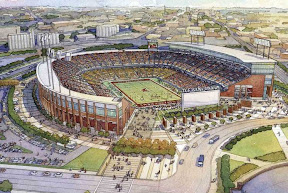
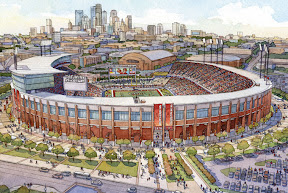
With all of this talk surrounding the Gophers, The Star Tribune had a good article on the TCF Bank Stadium also known as the Vault.
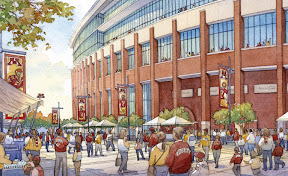
Photos were released Yesterday by HOK architects designers of the Vault, and photos appeared in the Star Tribune article I have linked above.
From Blog Photos

From Blog Photos

From Blog Photos

The stadium, although requiring significant investment, will be a great new addition to campus and to the region. But most importantly for the Gophers, it will help land (hopefully) a new and exciting coach, improve recruiting, generate more revenue, and increase attendance at games. I, like many others, have liked the new East-West orientation with the open bowl that provides great views of the University of Minnesota's important neighbor Downtown Minneapolis and its signature skyline. Minnesotan's will once again have to be prepared to face the elements though with an open air stadium after enjoying the luxuries of indoor football provided at the dome, but with the way Global Warming or Global Climate Change has affected Minnesota (especially in the fall) I think we'll survive.

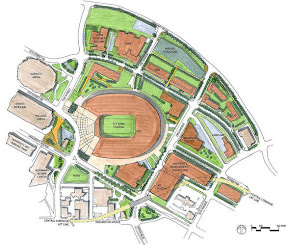
An added note to tack onto this post, recently in the comments a friend of mine asked how the Central Corridor would be tied into the site plan and where a possible station would go...
To answer this question I am posting the site plan that was posted on the development forum: Minnescraper by user blocksi.
From Blog Photos

In the bottom right corner, there is a large structure to the rear of the stadium with the words: University Development Transit Hub, and on the Southwestern corner of that building is labeled a potential CC LRT station. Now, whether the CC LRT will follow this implied alignment is debatable but it is good to see the University of Minnesota is actively planning and participating with the future of CC LRT. Hope that answers the question :-D

Lot's of links with this post I guess, but oh well. Things that are new in my neck of the woods include the decision to stay at home for my final semester at the University of Minnesota. I finished Thomas E. Rick's book Fiasco. And have started reading books on Public Transportation to help with my senior thesis which for the moment I am undecided as to what to write about, however, the two topics at present are: (1)Public Transportation Policy in Minnesota and comparison to Scandinavian Public Transportation: My ISP while I was participating in the SUST program (see old posts) and possibly (2) The need for investment in High Speed Rail in the Midwest. The second topic follows closely with a string of discussion: High Speed Trains - the 21st Century Freeway System? from the Minnescraper development forum that I often frequent. Also, we are getting closer to the start of Spring Semester which means time to buy textbooks!!
On the fun side of reading I am almost finished with Eric Nyland's third book of his series involving the Halo Universe this one titled Halo:Ghosts of Onyx. I also got some books for Christmas that I am hoping to plough through including a new book by Jared Diamond as well as a book on the Cholera epidemic that plagued London in 1854 (let's hope that doesn't happen to us).
Cheers for 2007 blogoshpere!

Saturday, November 25, 2006

A Week in Review

The past week has been pretty hectic. It started Sunday night when I pulled an “all-nighter” to finish my Independent Study Project (ISP) report on Scandinavian Public Transport and the presentation that would follow later on Monday afternoon. Once I had finished the Oslo section, the most detailed, I switched gears to the systems of Copenhagen and Stockholm and was able to find some good information but not to the degree of detail that I was able to get from studying the Oslo Public Transport atmosphere through my work at the Norwegian Conservation Society and the researchers I had contacted during my time here. Suffice to say, I was able to finish the report and had a total of 17 pages single-spaced due to images and figures used in the report and created a 22-slide presentation from that report.

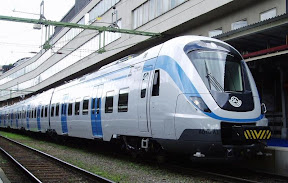
From Blog Photos

The X60 Commuter train, manufactured by Alstom
photo taken by User:Udo Schröter
date: August 2005
first upload: 16:11, Aug. 13, 2005 -­ sv:Wikipedia by the photographer
URL

The presentation went well, even though I was incredibly nervous and kind of loopy for not having sleep the night before. Tim quickly noticed that my skin color had turned to a very pale white and after our field seminar that morning suggested I go back to Sogn and get some rest. However, had I done that I wouldn’t have woken up for my presentation. So during our time between the seminar and my presentation I tweaked some things in the PowerPoint and added some extra pictures. After class, I went straight home to Sogn and crashed hard. I slept straight until about 10:30 or 11:00 PM, and then woke up for a snack. Afterwards I slept from midnight till about 10:00 Am I think, and then I had to hoof it to our seminar at the ISS classroom discussing Growth Fetishism in the world economy. Very interesting topic.
Later on Tuesday, our SUST group met with the Norwegian Progress Party at Stortinget that was very revealing. For the entire semester the Progress Party has been labeled as very Xenophobic in regards to its stand on immigration and integration issues and on the amount of foreign aid that they support. The man we spoke with, new where we were coming from politically and answered our questions very well. However, when I launched into him about High-Speed Rail and their opinions regarding Public Transport he told me straight that they supported cars over rails, however, he did not go into greater detail.
Wednesday involved the last meeting with my volunteer placement with the Norwegian Conservation Society. My advisor, Holger Schlaupitz, and I attended a High-Speed Rail conference hosted by Jernbaneverket (the Norwegian National Rail Authority) from 10:00 Am to 3:30 PM. The conference started with a presentation from a German Consortium VWI from Stuttgart, who showed the phase 1 of their analysis on the feasibility of High-Speed Rail in Norway. They concluded that the most feasible alignment for High-Speed service would be single track from Oslo to Trondheim based on market aspects. The travel time between Oslo and Trondheim would be reduced from 6 hours to 2 and half hours and serve 5,000 passengers a day. Their was a strong negative reaction from many of the attendants who were surprised that the Oslo-Bergen line was not selected, environmental effects were left out, etc. Personally I was surprised that a single track system was proposed when double track can allow for faster speeds and reduced dwell times for passenger trains at stations. Followed by the presentation from the Germans were two presentations by Norwegian proposals, the first being Den Sørnorske Høyhastighetsringen which basically means High Speed Ring route, a very ambitious project, however, is supported by the Conservative Party I think; and the second presentation was from a company called Norsk Bane AS whose website I have linked in a previous post.
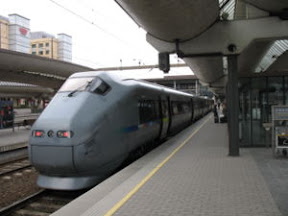
The Oslo-Gardermoen Flytoget Express Train
From Blog Photos

Origionally uploaded by Mr. Kjetil Ree, on wikipedia, origional image can be found here. Currently this is the closest thing to High-Speed Rail in Norway.

Thursday involved our final field seminar as our SUST group, when we all visited the Henie Onstad Art Center, where Maria has been working this semester and will continue to work for after the program is done. Thursday also consisted of the level 2 Norwegian students Mark, Jennifer, and Heather taking their Oral exams and then having their final Norwegian exam on Friday.
For me, Friday I spent the whole day walking around Oslo and taking care of some holiday shopping. In the evening I hung out with Tobias, Henrike, Marc, and Friederike. Marc and Friederike had visited the Freia chocolate factory earlier in the day, and told us all about it.
Now it is Saturday, and the weather sure hasn’t been cooperating this week at all. It has been raining for almost this entire week; I personally wish it had snowed but oh well. Have one more academic thing to do and that is the Final Praxis that is due on Monday before we leave for our SUST retreat where we will be staying in a hytte until Tuesday and coming back to Oslo.
Not sure what will happen this evening, but as the last partying night in Oslo, it should be a blast.

Be back in the Twin Cities soon.

Friday, November 17, 2006

Latest Addiction

This is a collection of photos and clips that I plan on using in my presentation on Scandinavian Public Transport coming up next week Monday. Enjoy, and let me know if you think it would be appropriate to include in a power point presentation.

Tuesday, October 31, 2006

My Independant Study Project - ISP


This has been the main reason behind my selection of Norway and the SUST program.


ISP- Scandinavian Public Transport

After our class visit to Copenhagen, I became interested in studying the major public transport systems of the three major Scandinavian Countries in the order our class has interacted with them: Norway, Denmark, and Sweden. The analysis will follow a compare and contrast of the systems with the following guidelines:

• Population – the size of the three capitols varies, how has this shaped their transport systems and what challenges has it provided?
• Size of Geographic area – this can be linked to population and size can be measured in hectors or square miles. This section could also feature geographical challenges for example Oslo’s Fjords and difficulties with Tunneling or because of Copenhagen with no geographic boundaries and no hills and what challenges this has presented to planners.
• The Age of the System – age is important in determining popular support and continued improvements. If the system is associated with failure, it is likely that it could fall victim to privatization. Age also has factors in condition of lines and decisions behind infrastructure improvements such as tunneling underground important sites for Metro lines.
• Sources of funding – How much of their funding comes from fair box recovery, how much is Nationally subsidized, what political institutions control them, is their a Minister of transport that oversees these operations, etc.
• Modes of transport – this would include all rolling stock of metro lines, busses, trams etc. Some of the major manufactures that have contracted with these services could be mentioned.
• The future of these systems – this would be the final chapter, expressing challenges these systems face be it in expansion, waning political support for public subsidy as is the example in Norway from the Progress Party, pressures of privatization. How will Norway’s EU membership (if it occurs) affect public transport, how are Denmark’s and Swden’s already affected.

My motivation to switching to Scandinavia and its three major capitol is to try to tie closer into the goals of the program. Tim and I have talked about how there is continuing pressures of cooperation in the Nordic countries. One of these players is the Nordic Council Ministers, whom we met with a representative of while in Denmark. It would be interesting to find out how this organization plays a role in transport. The motivation for the selection of capitol cities, is because they have the largest concentrations of people and activity requiring transport. And lastly, I would like to take back what I learn from this analysis and apply them to transport policies and infrastructure development in the Twin Cities, which was one of the main anchors in my reason for coming to Norway.

I continue to face challenges with the Norwegian Language in terms of research. Progress is being made in the volunteer placement, though I feel time is continuing to slip away. This will be the last change of the ISP. The end result will be a 15-20 page paper as stated in the syllabus in the program, and as a benefit to future SUST students a power point presentation summarizing the three major systems will also be presented.

Sunday, October 29, 2006

This brings a smile to my face...

Because I am what I call a "transport groupie", articles like these peak my interest. I promise to write an update on my activities here in Oslo and the program hopefully before the trip to Stockholm. Enjoy the following article which aslo can be viewed here.

Intercity ICE 3
Now, while the USA may not be as developed as say Europe with rolling stock such as this, imagine if we did. This is not a new topic of discussion for me, but one of my favorites...

Resurgent rails
Popularity of going by train grows with discontent with other kinds of travel. Plus,
the Empire Builder appeals to tourists year-round.
Kevin Giles, Star Tribune
As the eastbound train glides into the emerging sunlight south of St. Paul, John Stopa aims his video camera at a panorama of silver lakes and quiet woods flashing past the windows. "You don't see this in a plane," said Stopa, a Minneapolis native returning home to Chicago. "You don't even see this in a car." This is the Empire Builder, making its twice-daily run through Minnesota on Amtrak's most popular overnight route in the nation. Travelers upset with gasoline prices, declining bus service and fears of flying are boarding the Empire Builder, named for St. Paul railroad pioneer James J. Hill, in record numbers. Nearly a half-million passengers rode the Chicago-to-Seattle line in the fiscal year that ended last month, up 4.3 percent over the previous year, said Marc Magliari, Amtrak's spokesman in Chicago.
In Minnesota, about 183,000 people boarded or exited the Empire Builder in 2005, say the most recent figures available. That's up 10,600 from 2004.
Proponents say escalating ridership -- on the Empire Builder and other routes -- is further evidence of a resurgence of train travel that one day will combine overnight trains with high-speed commuter rail, light rail and other means of moving people faster and more
efficiently.
"We are now moving toward a new era in rail," said Rep. Frank Hornstein, DFL-Minneapolis, who's on the Minnesota House Transportation Committee.
"It doesn't matter if it's long-distance rail or Lake Street to downtown Minneapolis on light
rail -- people like this choice," Hornstein said.
Ridership in small cities
In Staples, one of six Amtrak stops in Minnesota, a growing Amish community inclined toward trains contributes to the upsurge in Empire Builder ridership, said Mayor Bruce Nelsen. He's also heard some of the city's 3,000 residents complain about airport delays and gasoline prices, and figures that even more people would board in Staples if the train didn't pass through at 3 a.m. in both directions. "It's an economical way to travel, no doubt about it," he said.
In Winona, the first Minnesota stop for the nightly westbound Empire Builder and the last for the morning train, many of the city's thousands of university students prefer Amtrak, said Mayor Jerry Miller. One of them is Atinuke Akinsanya, 20. "The bus really isn't convenient," she said. She rode Wednesday's train from St. Paul for about $30. Farther back in the coach, sisters Jeanne Burckhard and Rita Brossard stowed their blankets after riding from North Dakota the night before. It was their first train trip, they said, and they were going to Winona, where they would catch a bus to Rochester in time for their 75-year-old father's cancer surgery.
They also said that once they climbed aboard in north-central North Dakota, the train did the work, and they were relieved that they didn't have to drive in metro traffic. "We have no responsibilities," Brossard said, smiling. The Empire Builder, now in its fourth consecutive year of ridership growth, also is popular with summer tourists eager to see Glacier National Park, with winter travelers who want to avoid icy roads, and with people of all ages seeking regional connections. Lately, Amtrak has updated service on the Empire Builder, adding fresh-baked cookies and wine and cheese tastings in redecorated sleeper cars, and an at-seat food and beverage service in the coaches, among other perks. The upscale amenities are a
response to critics who thought Amtrak should be more profitable.
More trains, more riders?
In its annual report issued Thursday, Amtrak announced that ticket revenue stands at $1.37 billion, the highest ever. Nationwide, Amtrak carried 24.3 million passengers in the fiscal year that ended in September, an increase of 300,000 over the previous year. Minnesota railroad union leader Philip Qualey and other Amtrak proponents say that ridership would be higher yet if Amtrak had enough money to add coaches and sleepers to the Empire Builder. "Somebody needs to start talking about adding the second train along that route," said Rick Harnish, executive director of the Midwest High-Speed Rail Association. He and other Amtrak fans say that Minnesota also could sustain regional business routes linking larger cities like Rochester and Fargo with the Twin Cities. The planned Rush Line between St. Paul and Hinckley partly revives a route that until 1985 was Amtrak's North Star run. "With some really aggressive advertising, it would be scary how many people would get on this train," said Empire Builder conductor Cordt Rose, a Lakeville resident and a longtime Amtrak employee.
The federal government established Amtrak in 1970 after legendary passenger trains like the Northern Pacific Railway's North Coast Limited and the Milwaukee Road's Olympian Hiawatha, both of which served Minnesota, lost money and ridership to the point that they folded. Today, Amtrak provides intercity service to more than 500 destinations in 46 states. But despite three consecutive years of record national ridership -- more than 25 million last year -- Amtrak faces continuing threats of extinction.
The Bush administration proposed spending $900 million for Amtrak in 2007, which amounts to "a shutdown level," said Rep. Jim Oberstar, D-Minn. The administration's proposal would eliminate overnight routes, such as the Empire Builder. The House is debating $1.2 billion and the Senate, $1.4 billion.
Amtrak's critics, including Rep. Mark Kennedy, R-Minn., say the Amtrak subsidy represents a ripe target for savings, contending that the amount is disproportionately large compared with ridership. David Strom, president of the Taxpayers League of Minnesota, disputes that Minnesotans ride trains because they can't find other transportation. He thinks most of them are attracted to rail nostalgia, which he said is why he favors ending Amtrak service, including
the Empire Builder route, and preserving only Amtrak's heavy commuter routes on the East Coast.
"I'm not insensitive to people liking trains," he said. "The question becomes, 'Why is it that
a small group of people to whom the romance of trains is attractive is entitled to a subsidy
that the rest of the people pay?' "
Instead of trying to eliminate Amtrak, America should be building a network of high-speed
trains that rival those in France, Japan, China and other nations, said Oberstar, the
ranking Democrat on the House Transportation Committee.
Oberstar pushed for a $50 million appropriation to revive St. Paul's Union Depot as a hub
for passenger rail traffic. Amtrak's popularity is "part of a resurgence in transit," which he
said is adding a million new riders a day nationwide in buses, trolley, light rail and the like.
He said the trend toward trains accelerated after the terrorist attacks with airplanes five
years ago:
"The surge was enormous and many of them never left," Oberstar said.
Kevin Giles • 612-673-7707 • kgiles@startribune.com
©2006 Star Tribune. All rights reserved.


Giles mentions a lot of important things in the increasing debate about regional transportation that has been taking place in Minnesota and other Midwestern states for the past decades. Norway enjoyes a very well developed local, regional, and international (at least Scandinavia and connections to Europe) railroad network. If the Midwest wants to make a statement to the rest of the country about our importance, instead of all this west and east coast envy, we should pursue improvments to the connectivity of the midwest. I would like to see higher speeds, however, 110 is making steps towards improvment. I hope everyone in Minnesota Votes yes for Transportation funding (helps make me finding a job in the next couple years better) and to make Minnesota regional transport projects a reality instead of just a pipe dream or a should have, would have, could have 25 years from now.

Sunday, October 15, 2006

Now that’s what I call an Underground

As a quick side note, those interested in learning more about the London Underground should read this article from Wikepedia . The person who worked on this really did their homework.

One of the great things about the Semester Break in London was that I was able to experience a true Metropolis with a transport system that is one of the oldest in the world and one of the most extensive. However, along with this experience came of course analysis and discussion between my mother and I comparing different approaches to transport and even different transport choices in other countries.


The London Underground in Action, at Marble Arch station

This gave me a great opportunity to compare and contrast London’s systems with that of Oslo, Norway. Now some may say that you can’t compare the two systems because of existing circumstances and factors including: Geography, Population, size of the Urban Area etc. I beg to differ. Due to these specific differences, it makes it interesting to see choices that have been made; such as the decision to go underground with metro systems, the techniques used to create tunnels, and the potential conflicts that those choices will mean.

Even simply comparing the maps of the two cities, one can notice the differences.

From Blog Photos

The London System, while expansive, relies on a very dispersed layout with multiple lines and many connections between lines and services providing opportunities to change between all modes as well. For example, at certain stations you can change between multiple underground lines and switch to State Rail connections.

From Blog Photos

Meanwhile, the Oslo system focuses on more of a hub-and-spoke layout with most lines converging at Jernbantorget with connections to Oslo Central Station and NSB service to other cities. There are a few stations to change lines, but not to the degree of complexity that I associate with the London Underground, and the processes behind changing lines.


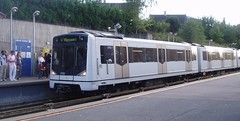
For example, to change to the Central Line to another line such as the Bakerloo or Piccadilly line, one must get to an appropriate station to change, exit the train, and then follow the signs and almost catacomb like tunnels of the underground, to either an escalator or sometimes an elevator to take one to lines either above or below another. A complaint that I am sure a lot of Londoners have is the heat associated with the Underground, in fact it something that I began to notice with the Oslo T-Bane when I got back from London.

A common thing my Mother and I mentioned was the inaccessibility of a many of the lines and platforms to those with disabilities such as those with Wheel Chairs or even women with carriages for there babies, you didn’t see many of those people in the underground. We often joked to take the underground you had to be in good shape to be constantly running from platform to platform and constantly going up and down stairs. There are stations that have level loading, but they are few and far between from looking at the maps yet is highly concentrated along the Eastern portions in zones 2 and onward to 6 as well as some large concentrations out in the West in zones 3 and onward.

As far as I can tell with the Oslo T-Bane and modes of Public Transport, almost all are in some way shape or form handicapped accessible and most have level loading with platforms and can accommodate the huge carriages that often accompany Norwegian mothers and their babies.

All of these discussions almost related back to Public Transport in Minneapolis. After looking over a lot of maps and articles I feel that Minneapolis and St. Paul could apply lessons learned from the Oslo system and eventually apply them with some underground lines in the future as pressures on development increase. Meanwhile for Oslo, planners should look to Copenhagen and Stockholm for influence due to Oslo’s population size being that of 600,000 (I think) with Copenhagen being slightly larger at 1.5 Million people.


However, Oslo could see another wave of centralization and urbanization in the next coming years especially with the prospects of EU membership. Oslo has a long way to go before it becomes a Metropolis to the degree that London is, but when and if the time ever comes they have plenty of cities to look too for applying practices, as do we in the Twin Cities.

Thursday, March 09, 2006

Maglev Trains + University of Minnesota = Bye Bye Campus Connectors

Way back in October, I wrote about my dreams of having a Maglev Train operating between the St. Paul Campus and the East Bank Campus ending near or around Stadium Village. To read the old post click here.

Recently there has been a lot of controversy about the Central Corridor and the University of Minnesota in regards to its alignment through Campus. There has also been controversy between the University On-Campus Stadium and the Station 19 Architecture Firm located in the Historical Landmark fire station off of Oak St. and University Avenue SE. To read the Star Tribune article click here.


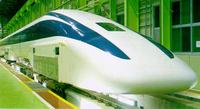
Goldy's Rapid Express, Complete with Maroon and Gold Paint Job and University of Minnesota Emblem. Even Maglev Trains love Maroon and Gold...

The train could operate along the existing U of M Transitway, and then go underground beneath the University of Minnesota Stadium and have a station with direct access to the concourses for public seating as well as access to Suites. Or the train could remain on the surface, but then tunnel under Oak Street and connect with the Central Corridor Light Rail underground station (if it ever gets built). Students could then connect to the Central Corridor LRT and have access to the West Bank of the University of Minnesota and the Campus Connectors could be eliminated completely. Buses could be sold to Metro Transit, but still keep their Maroon and Gold paint jobs, heck even one can be given to the Minnesota Historical Society.

In the Minnesota Daily, there was an article about the Regents and the coming agendas facing them. One in particular is the Central Corridor. In the article, there is more talk about using University funds to build god awful monuments to faculty, this time a giant wall, with formulas and theories written by University Faculty. The Scholars Walk is nice, but has taken a really long time to be completed. Meanwhile, the Stadium is still in talks with the Minnesota Legislature, and the University won’t be able to have any decision making powers on the Central Corridor Tunnel. I suggest to the Regents that they try to negotiate with the Metropolitan Council and MNDOT to allow students in the schools of Architecture, Urban Studies, and Civil Engineering to work with these stake holders in designing the underground stations of the LRT, maybe even the stations above ground as well.

While searching through the archives of the Minnesota Daily I found an article from about 4 years ago, where then President Yudof suggested using students in the school of Architecture to help design University buildings instead of hiring high priced firms. Why not do the same with Public Infrastructure such as LRT stations? This way, the University can activly participate with the project. In addition, the students could improve the current bus shelters, by having heating vents in the ground in bus shelters and not from heating lamps above. Sometimes I wonder about people who designed those bus shelters and LRT stations and where they got their degrees from. Don't they know that warm air rises so its really not a good idea to have heating lamps as a way of keeping people warm in the winter months. Also, the University of Minnesota should stand with Transit Advocates such as Transit for Livable Communities and encourage lawmakers to find a dedicated source of transportation funding.

I think it would be really sweet if the Maglev Train operating through Campus could become a reality, but maybe the buses will be what we have for the rest of our days. Plus, by the time all of this stuff is said and done, I will be long gone from the University. But it never hurts to dream. I have heard support for this project from others and I hope support continues to grow.
Let’s go Maglev and Light Rail. Trains may not be the “magic bullet” solution for all of our urban problems, but they can help reduce our dependence on the automobile and create a better urban form.

Think it over, and tell me what you think blogosphere readers.

Andrew

Wednesday, February 15, 2006

Central Corridor…No tunnel, No Train


Ah the Central Corridor, the Twin Cities second light rail line that may never be. This line has been the topic of many discussions in the world of transit advocacy and in the local papers including the Minnesota Daily

The Columnist for the Minnesota Daily, Angela Gray, must have attended the Transit Summit at St. Thomas before writing the article. I was impressed on how she interviewed some important figures of the Central Corridor Partnership and business owners located in the corridor. She even interviewed students around campus to see if they would support a light rail line going through campus. However, the student that she interviewed stated that a tunnel would not be crucial and that "students will adapt". I highly disagree.

A few weeks before the article in the daily was published, there was an article in the Star Tribune on Planning Officials, The University of Minnesota, and the controversial tunnel. A local blogger has commented on this issue as well. He has the story linked in his post. I suggest you read it.

Some crucial information left out in both of these articles has been the cost. They skimmed the surface of the cost of the project in Grays article of the project being around $800 Million, when really the project is closer to $900 Million. The project total cost in 2003 dollars was about $840 Million. The Metropolitan Council hopes that it can cut the cost by eliminating the tunnel underneath Washington Avenue. The figure is an estimated $140 Million. I assume most of the cost of tunneling would be the engineering improvements necessary to turn the Washington Avenue Bridge into a triple-decked bridge with Pedestrian on top, Traffic in the middle, and light rail on the third rung.

Without the tunnel, the light rail will be forced to run on the surface, eliminating two lanes of traffic on each side of Washington Avenue simply because it is not wide enough to support central median operation, parking, sidewalks, and two lanes of traffic. This is Washington Avenue, not University that is 120 ft. in width.

I wish planners had more foresight than 25 years. They should be planning for one hundred years. Then again, with the way cities change and re-arrange themselves it is difficult to see what changes in technology and the built environment will occur over the years.

Last week, while enjoying a conversation with a friend of mine at Royal, I got into a discussion with someone sitting behind me about how backwards the current University alignment is. He tried to sell to me that the line should be located 2 blocks North of University Avenue. He also tried to sell to me that we needed more vertical economic development, basically transit villages with very large multi-block “sky-cities”.

I had two major disagreements with his proposal. The first was the location. 2 blocks north of University Avenue is where the Red Rock/Northstar connection is planning on running on the freight ROW. The second is the cost. A proposal that includes such large planned development like a transit village would put the total cost probably into the Billions. Although I agree that development like a “sky-city” would be awesome for the Twin Cities, right now with all the space we have available there is no pressure for land conservation and thus development like this is seen as overkill. For those interested in these types of development I suggest viewing Discovery Channel’s series Extreme Engineering.

Last issue to write about is the controversy of the intersection of University and Snelling Avenues. I agree with the author of twin city sidewalks, that the light rail may need to be elevated over this intersection like the Lake St. station which would be cool or be put underground which is pretty unlikely. I think an elevated station would be the best bet. As for the owner of the Midway Bookstore, I hope his store is where the first plank goes for the station. Just think, had he supported the rail he probably would have gotten a much better facility and benefited from a more walk-able University Avenue.

Back to my original topic, this Tunnel is crucial. If the tunnel is not in place, it will add more congestion and suck up tax dollars just as Republicans say it will. Let’s not let this happen. I encourage all members of the University of Minnesota to encourage planners and the powers that be, that the Central Corridor has to have a tunnel or needs to be put on the shelf until other rail projects such as Northstar are completed.

Whew, a pretty lengthy post…ENJOY!!!!

Andrew

Saturday, January 28, 2006

A Commuter Rail Line Named…Northstar


I’ll explain myself for the title. I was trying to copy “Streetcar named Desire”- a movie title with a form of public transportation in it and another movie that I hope to see in the near future. Thursday night I visited the open house/public hearing for the Northstar Commuter Rail Line which would be Minnesota’s first Commuter Rail project. Side note- last night I watched “A Streetcar named Desire” and that movie was weird.

I arrived at the Heywood Office Building of Metro Transit at 4:30 after taking the #19 bus from Seven Corners on the edge of Downtown Minneapolis and University of Minnesota West Bank. The open house didn’t start until 5:30, so I waited in the lobby and chatted with the ladies that were setting up and greeting guests as they arrived for the open house/public hearing. Through my conversations with these ladies, I found out my official title in the world of Transportation advocacy. I am now an official Rail Transit “groupie”. The ladies in the front compared me to a young man who like me was from the University of Minnesota and was a “die hard” for the Hiawatha Line and attended almost all of the public meetings. I am glad that I now possess another title in addition to my self made title of die-hard or true believer.

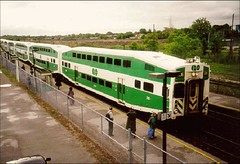
Once people began to arrive for the open house/public meeting, I began to work the floor and look at the information they had posted on numerous slides in the conference room and talk with the people in the yellow shirts that were helping answering questions and presenting figures. The NCDA or the Northstar Corridor Development Authority did a great job of presenting facts and figures, and even had a rendered animatic of the Northstar Commuter train as it would appear in operation and how the stations would look, similar to the rendering that was done for the Central Corridor a few months ago created by the Central Corridor Partnership. In some of the slides, there were renderings of the bi-level coaches that Northstar will use. I asked one of the guys in yellow, whether he knew that Northstar would buy their locomotives and coaches from Bombardier or from another company and asked him how they would do it. The man explained to me that the process is a lot more complex than just placing an order with a supplier like Bombardier. There is an entire process dedicated to acquiring vehicles that needs to go through the FTA as well and takes up the majority of resources. I assume the Met Council will choose Bombardier because we have already worked with them for the LRVs used on the Hiawatha line and will be used on the Central Corridor as well.

At the open house I ran into some familiar important figures. The first was Mark Fuhrman, the project leader of Northstar. I had met Mark during one of Frank Loetterle’s Fundamentals of Transit Planning a year ago and so we chatted for a few minutes. I told Mark that my studies in Urban and Regional Planning had continued to progress and that this semester I was taking two graduate level classes that related to transportation planning. I also told him about my small internship with Transit for Livable Communities (TLC) the previous semester and the work we did researching for the Central Corridor and how I worked with the Midtown Greenway Coalition and had attended a number of their public meetings and workshops as well. Mark seemed impressed with my activities since the last time we had talked, and I informed him that if he had any work available or possibilities for internships over the summer that he should feel free to contact me. I left my information with his staff, and I hope that is enough to at least get my foot in the door and get credit towards my Urban Studies degree. I also met with Brian Lamb, the general manager for Metro Transit who recognized me as I returned to my chair. I chatted a while with him about my recent activities and expressed my hopes for Northstar in that it puts pressure on other transit projects such as Red Rock and Central Corridor.

Also at the meeting, I met a man from my home town of Brooklyn Park. He asked me if I knew anything about the Northwest BRT line which would run along 81 up into the Northwestern Suburbs. It turns out that he lives near the Crystal Airport and has taken an interest in all of the recent articles about the Crystal Airport in the Brooklyn Park SunPost. Having not been at home, I hadn’t really had the chance to read up on the current development plans, however, my dad sent me the articles and I have since been brought up to date.

The meeting was long but very interesting to attend and see what was going on in the world of Northstar development. Also included in the plans for Northstar, was the mentioning of the potential of the Twins Open Air Stadium located next to the Minneapolis Multimodal station for Northstar and Hiawatha. When Kristen and I took the express bus 766 out to Brooklyn Park we drove past the sight, and it was interesting to observe already the condo/loft conversions underway in those areas. It will be interesting to see what further ramifications investment in transportation infrastructure will have on our Twin Cities. In Friday’s Star Tribune there was an article about an upcoming exhibit on cities and art specifically about the Twin Cities and Minneapolis and the demise of the Milling Industry on the Riverfront being shown sometime in February. I hope to make my next post about predictions on development and what the future may look like for the Twin Cities. However, to predict the future one must understand the past. With that in mind, I picked up two books both by Larry Millet titled Lost Twin Cities & Twin Cities: Then and Now both books that cover in great detail the changes that the cities of Minneapolis and St. Paul have gone through over the past decades.

To learn more about Northstar click here. Also be sure to check out my previous post on the Central Corridor if you haven’t already, at the end there are links to many Transportation related sights for the Twin Cities

Until next time, see you all on the train as the smoke rises from the engines!!! WOOT-WOOT!!!!

Andrew “the transit groupie” Wambach

Saturday, October 01, 2005

Zoom Zoom Zoom, not in a Mazda, But in a freakin’ fast train!!

All right, for all of you readers who complained about the CC post, this will be one of my last entries on Transportation Issues in the Twin Cities. On a side note, it is my Major here at the University and if you don’t like it don’t read it. It’s as simple as that.

Over the Summer, I was working at Minnetex over on the West Bank of the University of Minnesota. I would get up in the morning and ride my bike along the transitway between St. Paul campus and East Bank; then make my way to Wiley Hall. The ride was about 5 miles from the house on Lindig to the West Bank and took me about twenty-five minutes to a half hour to get to work.

As I was riding, I noticed the existing rail infrastructure that ran parallel to the transitway and into the big industrial complex near the Huron lots. I also noticed the seldom Campus Connector that would run past from time to time. It was Summer and the busses weren’t running as often as they do during the school year. The rails were often empty, except for the occasional large freight train burling down the tracks at top speed, and another morning I was up early enough to cross over the tracks and see an Amtrak passenger train making its way towards St. Paul.

One particular morning it was raining really hard, and I had slept in so I was already late for work and had missed the Campus Connector at Gortner. As I am riding I am thinking to myself, “This really sucks, why did I sleep in? I swore my alarm clock went off, and on top of that I have to ride in the rain!! I wish there was a faster way to get where I am going.” And then it came to me. One of the craziest ideas I had of the summer, building a Maglev line between the St. Paul campus and the East Bank.


Maglev Train

Maglev stands for Magnetic Levitation and is a transportation technology involving the use of magnets to propel passenger trains at higher speeds than existing rail technology. There are test guideways in Germany and in other countries and China has already developed some lines that use this technology. We discussed this technology in my Fundamentals of Transit Planning class last semester. My professor had been to the test track in Germany and had a chance to ride on it. Speeds could be reached of upwards of 256 Miles per hour, but where not tried any higher due to the length of the guideway.

There are some disadvantages associated with Maglev. The first and most important is the cost of building and maintaining the guideway that maglev runs on. Maglev runs similarly to a monorail type of track, no rails, often just concrete with lots and lots of magnets and sensors built into them. This is why the technology is not as popular as it could be. Most of the world still has a ton of regular rail infrastructure that can be upgraded for the use of High Speed passenger trains as has been done in most of Europe and Asia, but not here in the United States. The cost of building the new guideway is often what kills the enthusiasm for the project.

However, if the University of Minnesota and specifically the Center for Transportation Studies where to try and get a test track similar to the one in Germany , we may be able to get some of the cost of the guideway paid for by the Federal Government. I know a lot of students would rather see a stadium ( I want one of those too) or reduced tuition (me too as well), but imagine for a second, getting on a train at the newly completed Gophers stadium after a Gopher victory, and being “zoomed” over to the St. Paul Campus in under 7 minutes!!! Same with people who have live on St. Paul campus or near the St. Paul campus (as I do), they could get themselves to the St. Paul Student Center and then take the train to the East Bank. The system could later be extended to the West Bank, and could initially connect the State Fair grounds as well and limit the number of buses coming from the Huron lots.

I don’t know about the rest of you, but the idea of getting on a train and being able to travel from the St. Paul campus to the East Bank in under 7 minutes compared to the bus system (which is great I admit) that takes 15 minutes to a half hour, will sound awful nice come December.

In the meantime, see you on the bus!!

Andrew

Saturday, September 24, 2005

Central Corridor


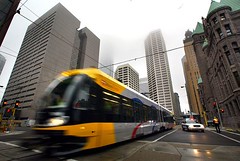
(Note) Picture on left origionally posted in the Minneapolis Star Tribune and obtained from the Metropolitan Council Website, and is of the Hiawatha LRT Line. Thought it would add to the post!!.

As I was heading over the Washington Avenue Bridge today, I had a realization: There are way too many busses on Campus. Especially on Washington Avenue, which besides University Avenue/4th St. is the main thorough fair in and out of Campus. Washington connects the two main banks of the U of M campus (East and West) and is therefore pretty busy in the morning, lunch period, and evening rush hours. This can be seen by the amount of pedestrian and bus traffic in and around stadium village during the lunch period, and the sheer amount of congestion this area experiences during the three time periods listed above.

In Geography 3371: Cities Citizens, and Communities, I have been given the opportunity through CSL (Career Student Learning) to intern with Transit for Livable Communities (TLC). TLC is a major advocacy group for the development of Transitways, bike and pedestrian friendly paths, and Transit Oriented Development in the Twin Cities metro area and region. The major focus of our group’s internship is the Central Corridor Light Rail project. The Central Corridor is an 11-mile corridor consisting of Washington Avenue and University Avenue between the downtowns of Minneapolis and St. Paul Minnesota also known as the Midway District. Historically, the Midway district was serviced by the streetcars and was a location of heavy shipping, industry, commercial, and residential development. In the 1950’s the streetcars were ripped out and replaced by the bus system, it was a very complicated issue and a number of people went to jail. Ultimately the Twin Cities lost one of the best streetcar networks in the country, and we have been struggling to get back to that glory ever since.

Currently the area is serviced by the Route #16, #50 and #50S bus lines operated and owned by Metro Transit. The Express bus 94B, C, and D operate on Highway 94 and offer express service between the two downtowns with higher speeds than the routes #16 and #50.

Our main task with Central Corridor is to help determine the actual path of the LRT and ease the process of implementation. Also, we have to consider how to keep the current residents from being displaced from new development and the higher densities that are expected (hoped for) with the running of LRT between Minneapolis and St. Paul. Which brings me to my opening paragraph. The planners want the LRT to run on the surface until Washington Avenue and then tunnel under the East Bank of Campus and then re-surface on University Avenue all the way to Downtown St. Paul. Sounds pretty cool huh?

Howver, there are some problems with this plan. If the city planner wants to tunnel, then he should tunnel starting on Washington Avenue, underneath Cedar Avenue right before the West Bank Skyway/Blegan and Whiley Hall complex. By placing the tunnel further back, we can dig below existing utility lines and have underground stations on both the West and the East bank sides of campus, with either express elevators going to the street level for campus connectors, and plaza level for students/guests etc. similar to what was done at the Lindberg Terminal. The University would be asked to contribute in a number of ways. Have architectural students create plans for University Subway Stations both at East and West Banks and any of the other stations that students interested in the project would like. At the same time, the University could buy advertising space on a couple of the trains and have them painted in Maroon and Gold motifs with Goldy the Gopher on one of the trians. At the same time, professional architects and designers will plan out station designs as well. University United should be contacted and asked to voice their opinions as well. I have contacted and worked with this group before and they are very determined to make University Avenue more like the grand Baroque Avenues and Boulevards with intense commercial, but predominantly residential development.

However, creating stations on both sides of the river could cause problems with headways and running times. There are already two-three stations relatively close to the University of Minnesota West bank. These are the Cedar Riverside Station, the Metrodome Station, and to the extreme the Franklin Station. However, adding another station beneath the west bank, could potentially decrease the amount of bus activity above ground and provide new tunnels for the Gopher way, and a true connection from both sides of the West Bank underground than across the West bank skyway.

Platforms underground would be reached by elevators or escalators (depending how far down we dig) and once on the platform the other side could be reached by pedestrian bridges that cross over to the other side, or tunnels that go under the tracks/trains and come up on the other side.

Another problem concerning the underground stations is passenger security. Underground stations would have to be well lit and potentially have barriers to entry similar to New York subway stations. Otherwise, campus security could monitor these facilities as well as officers of the Transportation Police Department. By creating barriers to entry, Minneapolis and the State of Minnesota could begin using a system like the Metro Pass; many people already buy discounted transit passes including many students who use the UPass program.
The decision to go underground was made after seeing the incredible amount of bus traffic already on Washington Avenue on campus including Campus Connectors and Shuttles, Metro Transit, Southwest Transit, and Metro Valley Transit Authority (MVTA) all operating in this space and having to contend with heavier traffic.

Now that I have covered some of the issues with the tunnels proposed by the Central Corridor, it is time we addressed some of the surface effects. I know some of you are asking me, “you started this argument with buses, get to the buses already.” I am about to do just that. By implementing the CC LRT plan; the train would replace the limited service provided by the route #50 and #50S. The route #16 would still provide service to all other stops. Most likely, the 94B would still run on Highway 94 depending upon the success of LRT.
Some classmates of mine have argued that the LRT will only make things worse along University Avenue. University Avenue is one of the busiest Truck corridors in addition to regular traffic. By running LRT down the middle, it may be difficult to maintain University Avenues uses as a truck route. In addition, two lanes of traffic may be eliminated in both directions to make room for trains and stations. To eliminate this problem, the LRT may have to be elevated similar to Chicago’s L line. Although this would increase the costs and diminish the appeal, it would allow for stations to be placed in the locations picked out and not interfere with traffic, until entering downtown St. Paul and the Union Depot which has plans to be turned into a multi-mode station for both the CC LRT and the Red Rock Commuter Rail Line running from St. Paul to Rochester.

My classmates have also argued that the CC will not solve commuting problems if there are too many stations. The CC will have to be fast, and get people from Downtown Minneapolis to Downtown St. Paul in under 30 minutes (my desired figure). The #50, can get you to downtown St. Paul in about 45-50 minutes depending upon traffic, the #16 takes about an hour or more at the most, it’s worse with traffic. If the CC can provide commuter service to both downtowns, then it might be as successful if not more than Hiawatha. We will just have to wait and see what Metro Transit and the Council decide.

The Central Corridor is a very ambitious plan. Meaning that it is going to be expensive. Hiawatha, which was a longer corridor and had more stations, ended up costing about $725 Million Dollars and that was with a trimmed budget. Because of the tunneling and infrastructure costs of elevating CC, the cost of the project could potentially be in the billions. This is why, Metro Transit, and the Metropolitan Council, need to be careful and listen to the public before going and building something as extravagant as the CC LRT. I, like most people in the Urban Studies program here at the University of Minnesota, want to see this project get the green light and pass with flying colors. To do this, the citizens of Minneapolis, St. Paul, and the region need to get involved and push for a reform in the way our Transportation system is funded. A dedicated sales tax, as has been done in many other cities in the United States, could help Minnesota reach her goal of a dedicated public transportation system by 2030, and allow for new residential and commercial development in the cores of both downtown Minneapolis and St. Paul that we are already seeing in the Loft and Condo boom. Just imagine the amount of cars on the road if we don’t invest in a new system, our entire workdays will be spent on the highways. And gas prices are only going to increase, unless our nation spearheads the move toward renewable energy sources.

Time to get down from the soapbox, but to emphasize that public involvement is needed and appreciated. We as citizens, control what is implemented. Although it may not seem like that at times under the current administration, this is still a Democracy. Citizens of this State and region have a duty to plan and anticipate the future so that we can tell our leaders what we feel is best for the state of Minnesota, our role in the Midwest, the Nation, and the Global Economy.

For any questions:
Email: wamb0011@umn.edu

For news and how to get involved in other transportation projects around the region: (URLS’s)
Northstar Commuter Rail: http://www.northstartrain.org/
Central Corridor: http://www.centralcorridor.org/
Metro Transit: http://www.metrotransit.org/
Metropolitan Council: http://www.metrocouncil.org/
Transit for Livable Communities: http://www.tlcminnesota.org/


Thank you,
Andrew Wambach
University of Minnesota Twin Cities
Urban Studies